
Eddie Romero
Eddie Romero is included in Negros Island Stories as a Dumaguete-born filmmaker, screenwriter, and producer whose career became an important part of Philippine cinema. His work spanned more than six decades and included historical films, political dramas, international productions, and television. In 2003, he was named National Artist of the Philippines for Film and Broadcast Arts.
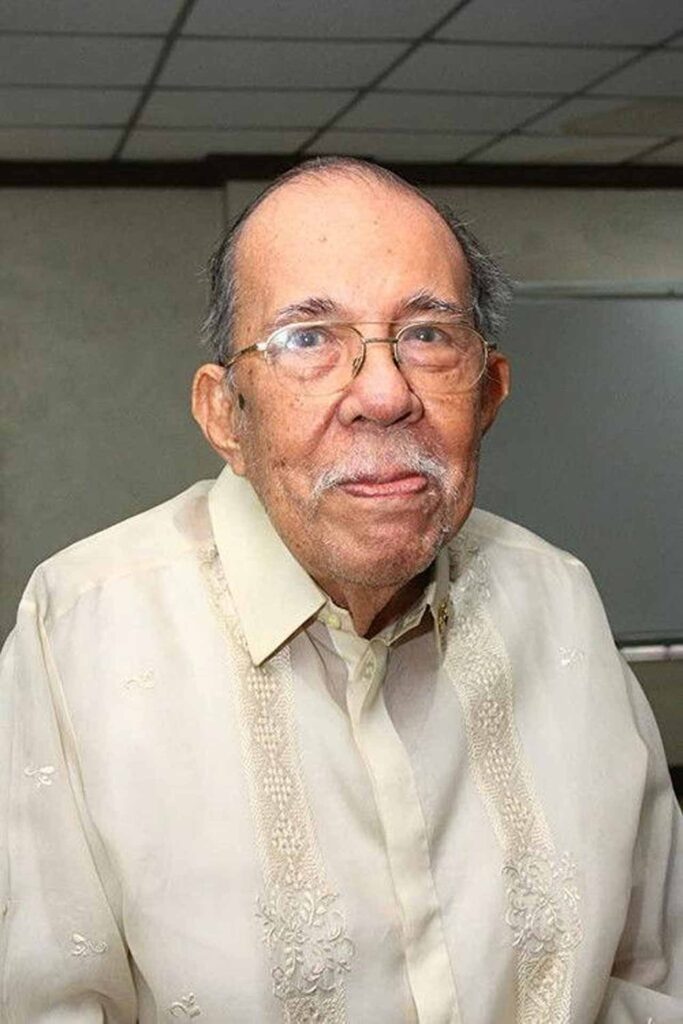
Biography
Name: Edgar Sinco Romero
Also known as: Eddie Romero
Born: July 7, 1924
Died: May 28, 2013
Place of birth: Dumaguete City, Negros Oriental
Field: Film direction / screenwriting / film production
Education / early connection: Dumaguete Elementary School and Silliman University High School
Professional work: Film director, screenwriter, and producer
Major recognition: National Artist of the Philippines for Film and Broadcast Arts, 2003
Known for: Ganito Kami Noon… Paano Kayo Ngayon?, Aguila, Kamakalawa, Banta ng Kahapon, and Noli Me Tangere
Eddie Romero — Significant Contributions
Philippine Cinema
Eddie Romero developed a film career that lasted more than 60 years, working as a director, screenwriter, and producer.
His films covered different periods and genres, including historical drama, political cinema, action, and international commercial productions. His work frequently addressed Philippine history, society, and national identity.
National Artist for Film and Broadcast Arts
In 2003, Romero was conferred the Order of National Artist for Film and Broadcast Arts.
The recognition acknowledged his long contribution to Philippine cinema and a body of work that included directing, screenwriting, production, and television.
Films on Philippine History and Society
Among Romero’s best-known films is Ganito Kami Noon… Paano Kayo Ngayon?, released in 1976.
His other major works include Aguila, Kamakalawa, and Banta ng Kahapon. These productions examined Philippine history and society through large-scale narratives and individual characters.
Noli Me Tangere
Romero directed the 13-part television adaptation of José Rizal’s Noli Me Tangere.
The series brought Rizal’s novel to television audiences and became one of the major works associated with Romero’s later career.
International Film Work
Romero also worked on international film productions and developed connections with American filmmakers and actors.
During the 1960s and 1970s, he participated in English-language productions and worked with figures including producer Roger Corman and actor Jack Nicholson. His film Black Mama, White Mama later became one of his best-known international productions.
Dumaguete and Negros Oriental
Romero was born in Dumaguete City and spent part of his early education there.
His connection with Negros Oriental also appeared directly in his filmmaking. The Passionate Strangers used Dumaguete and nearby towns as important settings, while Kamakalawa was filmed in Negros Oriental.
Cultural Legacy
Romero remained associated with Philippine film for several generations.
In 2024, Dumaguete marked the centenary of his birth with screenings, lectures, an exhibition, and the unveiling of a bronze bust, with participation from cultural institutions including the National Commission for Culture and the Arts and the National Museum of the Philippines–Dumaguete.